ENVIRONMENT, CLIMATE CHANGE, AND HEALTH
This section explores the intersections of global health, climate policy, and environmental risk, aiming to strengthen global governance and accelerate action to protect health in a warming world.

This page provides access to key publications, event outcomes, and ongoing discussions on the policies and practices needed to address environmental risks, climate change, and their impacts on health worldwide.
Related Publications
Stay tuned for our upcoming Environment, Climate Change, and Health Policy Brief series.
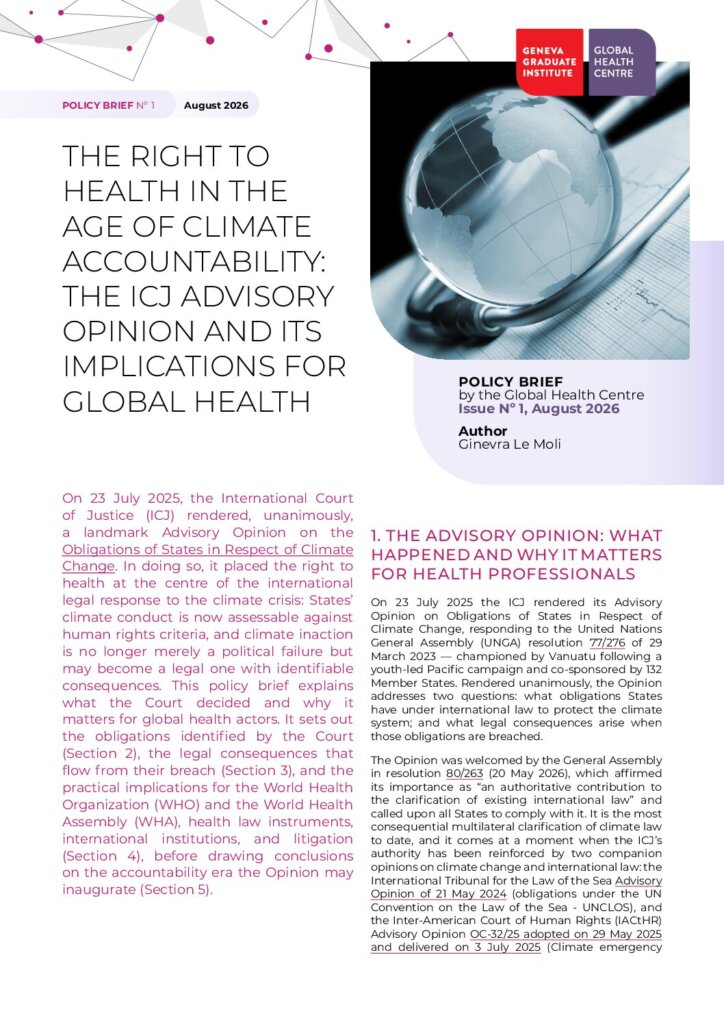
The Right to Health in the Age of Climate Accountability: The ICJ Advisory Opinion and its Implications for Global Health – Policy Brief No.1
by Ginevra Le Moli
Two-Speed Multilateralism: Breaking the Deadlock on Climate and Health

Multilateralism at Work: Getting Mercury Out of Skin Lightening Cosmetics
The global governance of climate change and health
Strong Support Among WHO Member States for Health-Focused Action on Climate Change
Related activities

Climate Change Negotiations and Health

This free, open-access online course, developed by the One UN Climate Change Learning Partnership (UN CC:Learn), provides essential information on climate change and its impacts on human health. Additionally, it offers a comprehensive overview of climate change negotiations and explores entry points for addressing health priorities within climate change policies and negotiations. The Global Health Centre contributed to the 2024 update, revising the course to reflect recent developments in health-related topics within climate meetings and negotiations.
How Well Are National Climate Plans Protecting Health? Launching the 2026 Healthy NDC Scorecards

DESCRIPTION
Under the Paris Agreement, governments update their national climate plans – known as Nationally Determined Contributions (NDCs) – every five years. These plans set out emissions reductions targets and interventions across sectors to address climate change. Health is a vital part of effective climate action. Ensuring the integration of health into climate policy protects populations, maximises economic benefits, and builds public support for ambitious climate policies which are so urgently needed.
In October 2026, the Global Climate and Health Alliance (GCHA) will launch the latest iteration of the Healthy NDC Scorecards, which provide a global assessment of how comprehensively health is integrated into national climate plans. The Scorecards examine, among other things, references to health impacts and air pollution, health-related actions across sectors, and financial and governance considerations.
By producing a global ranking highlighting where health is being addressed – and where important gaps remain – these scorecards provide policymakers with a tool to identify opportunities to strengthen the health dimension of climate action.
Ahead of COP31, this event will bring together governments, policymakers, international organizations, civil society, and health and climate experts to explore what the findings tell us about the current state of health integration in national climate planning, and what is needed to strengthen it in the next round of NDCs.
SPEAKERS
Welcome remarks: Suerie Moon, Professor of Practice, International Relations & Political Science Department and Director, Global Health Centre, Geneva Graduate Institute
NDC Scorecard Results: Dr Nova Tebbe, Post Doctoral Researcher, Global Climate and Health Alliance and Climate Solutions for Health Lab at the University of Wisconsin-Madison
Panel discussion:
– Amy Savage, PhD, Technical Officer, Climate Change and Health, World Health Organization
More speakers will be announced soon.
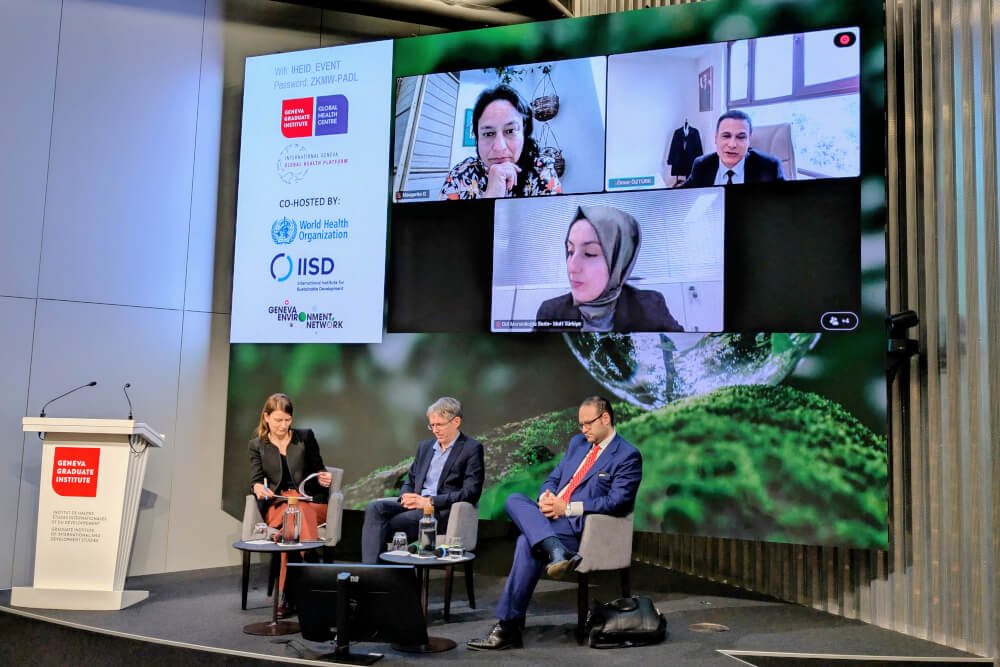
Two-Speed Multilateralism: Can it Address the Climate and Health Agenda?
Climate change is one of the defining public health challenges of the 21st century, with impacts ranging from heat-related mortality and air pollution to food insecurity, vector-borne diseases, and mental health risks. While health received increased political attention at COP30, important questions remain about how effectively health considerations are integrated into climate mitigation, adaptation, finance, and just transition frameworks.
At the same time, global climate governance is evolving— alongside the traditional consensus-based UN process, a form of “two-speed multilateralism” is emerging, where coalitions of willing countries and non-state actors advance practical initiatives and voluntary roadmaps. As the world looks toward COP31 and the implementation of the World Health Organization’s Global Action Plan on Climate Change and Health, this evolving governance landscape raises important questions about how climate action can better advance health outcomes.
This hybrid event will bring together governments, international organizations, civil society, and academia to take stock of COP30 outcomes, explore opportunities to strengthen the climate–health agenda in the lead-up to COP31, and examine how new coalitions and political initiatives can accelerate action.
Health at the Heart of Climate Action: Turning Frameworks into Reality
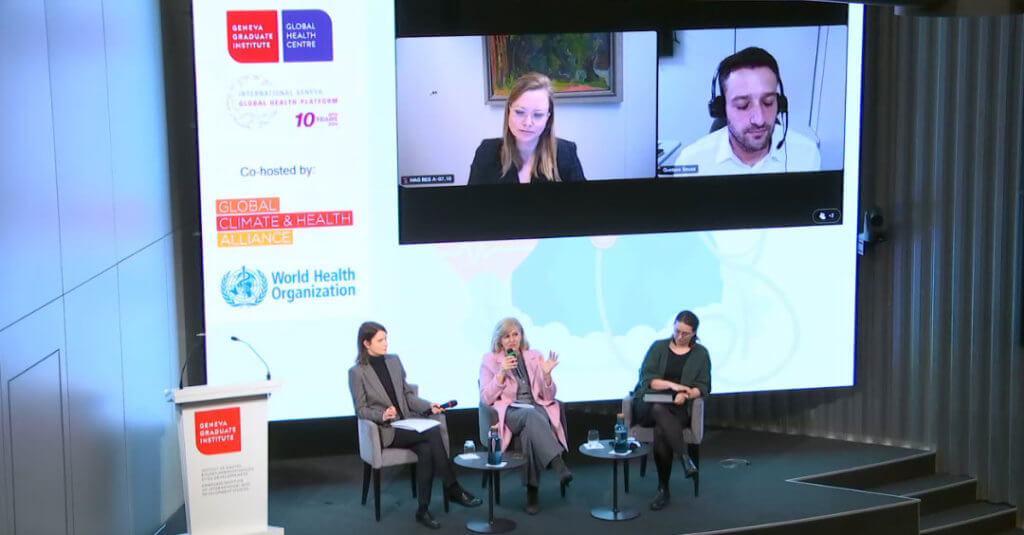
On 20 February 2025, the Global Health Centre’s International Geneva Global Health Platform co-hosted at the @genevagraduateinstitute with the Global Climate & Health Alliance and the World Health Organization (WHO) a panel discussion on the theme: “Health at the Heart of Climate Action: Turning Frameworks into Reality”.